

John Mangan had a 25-year Air Force career, much of it flying as a combat search and rescue pilot. A Veteran of over 200 combat missions, John has been awarded the Distinguished Flying Cross with Valor twice, the Air Medal 12 times and the Aerial Achievement medal twice. His actions in combat have been documented in the books Not a Good Day to Die, None Braver, Zero Six Bravo, and Dead Men Risen.
Mangan has taken lessons learned in combat and integrated it with sport psychology to write the book “The Three Rings Mindset.” His book shares examples and techniques used by professionals to overcome fear and control their stress response. The lessons in this book apply just as well to high stress careers or those of us just leading “normal” lives.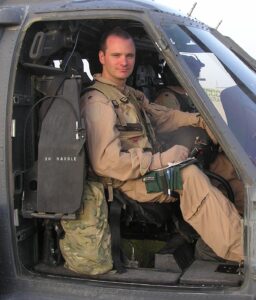
He says that our programmed “fight or flight” response leaves us ill-prepared for modern life and the differences between the Symphathtic Nervous System and the Parasympathetic Nervous System.
He also shares some stories from his time in combat. One of his first combat rescue missions was the now famous “Operation Anaconda” where 80 troops were trapped under fire and took 30 % casualties. Another involved a mission where his wingman, newly arrived in the combat zone, flew directly over the enemy position, and took a great deal of enemy fire. The next day the same wingman committed the same error again. Later as an instructor, Mangan programmed the same scenario into his classes and found that many of his students made the same mistake. This was one of the motivating factors in leading him to study the psychological responses to stress.
The Tree Rings Mindset reads more like a “how to” manual include techniques such as belly breathing, breaking the failure loop, “winding the watch” and staying focused upon “what is” versus “what if” scenarios.