“Empire of Ashes; Truman, Hirohito, and the Descent Into Total War” is James M. Scott’s third book in a series about World War II in the Pacific. James is an acclaimed Pacific War historian and multiple New York Times bestselling author.
His books are meticulously researched and well written. James has previously appeared on our program to discuss his books “Rampage; The Battle of Manila” and “Black Snow” about the firebombing of Japan.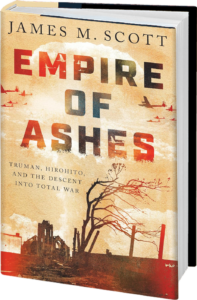
Empire of Ashes doesn’t focus on the atomic bombing itself – a subject already extensively covered. Instead, James introduces us to the human dynamic and the context and logistical circumstances that influenced the eventual decision to use the bombs.
Harry Truman was a farmer with a high school diploma. He was no one’s first choice to run as Roosevelt’s Vice-President and Truman himself really didn’t want to position. “He spent more time behind a mule than he ever spent at 1600 Pennsylvania Avenue.” Truman was the third choice to be Vice-President, and the eventual selection was dubbed “The Missouri Compromise”.
Truman had only been Vice-President eighty-eight days when Roosevelt died. Eventually he was forced to make one of the most consequential decisions any world leader has had to make.
Many misunderstand Japanese Emperor Hirohito’s power during the war. Though he was the center of cultural and spiritual life, in many ways he was powerless. Instead, the military held almost total dominance. At great risk to his own life and dynasty, Hirohito’s eventual decision to declare surrender was key to ending the war and maintaining peace afterwards.
A great deal of healthy debate regarding the potential losses involved in invading the Japanese homeland took place among US leaders. The New York times wrote “If it took almost three months to conquer Okinawa, how much life, treasure and time must we expend to conquer Kyushu and Honshu?
James touches upon the differences between defeat and surrender and the semantics of the eventual proposal that led to ending the war.